
Drop Two Anchors
Outward Bound on the Atlantic Ocean

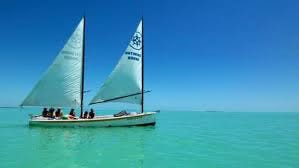
Image: Two-mast Outward Bound sailboat, Atlantic Ocean courtesy of Outward Bound
Leadership
We opened Children First Academy-Phoenix (CFAP), August of 2008, under the shadow community doubt. Maricopa County had recently shuttered Thomas J. Pappas Elementary, a school exclusively designed to serve children of homeless families, under suspicions of nepotism, bid rigging, and fraud. To fill the maw left in our community services, several staff and some local charter schools combined forces, renting out an old car dealership, and delivering services to kindergarten through 8th grade.
As a part of the new leadership team, I suggested we partner with Expeditionary Learning, now EL Education, for teacher and leadership development modeled closely after the Outward Bound teaching and learning modalities. All in, we began with two weeks of teacher training, thereafter sending teams to New York City and Little Rock, Arkansas for immersive experiences in learning design, implementation and evaluation.
Our teachers and students were exposed to wonderful opportunities that took them well beyond the shelters, classrooms and mind sets that often accompany homelessness. Enrollment went up, attendance spiked, community partnerships and donations poured in. Our teachers garnered the appropriate amount of local and national attention for their innovative approaches to teaching impoverished and marginalized youth.
The Keys
Scott and David took a risk on me. Our two capable and loving School Designers saw something in me that made them think I was a viable candidate for an unsupported ocean excursion with Outward Bound. As a newly minted school director, passionate about CFAP’s mission, collaborative in developing our vision - they wanted me to join 13 other school directors from all over the United States.
Join them where, exactly? On a sixteen foot, two-masted sailboat, launching near Miami, exploring the Florida Keys, and learning about how to lead via our united sailing experience. I’ve lived all but two years of my life land-locked, desert or mountains, comfortable in both. I’d never sailed, nor had I been that far east.
Not to worry. This is all about the tenants of expeditionary leadership.
At least that’s what they assured me.
Another Arizona school leader and I picked up our bags from the turnstile at Miami International Airport, watching the news that one of our Congresswomen had been shot while delivering a speech in Tucson. We checked in at our hotel, wandered down town, where I spotted Chuck Liddell, and grabbed some Cuban food.
The anticipation was nearly as hot and humid as the weather, discussions and predictions flourished as we munched fried plantains and sipped beverages. Winds pushed and pulled on my expectations. I slept soundly that night.
The boat
Our guide introduced herself as Peels, stopping just short of describing its origin, as she adjusted her sun bleached ball cap. Smiling eyes and sun creases told the story of her many days on the ocean. I decided then and there to curate every word she said.
Motioning us to our boat, we later christened Suffering, Peels went over the parts of the boat, emphasizing that this was the language we would be speaking for the next week. Once our gear was properly checked, re-packed and stowed, we climbed in the boat and reviewed its contents and equipment.
Masts, oars, safety vests, flares, radio, and so on. Cooking equipment…wait, what? Yeah, we cooked our own food, daily. Then we got the personal hygiene bits. When the conditions are amicable, we poop and pee in the ocean. Under sail, we relieve ourselves over the side. All fourteen of us, three men, exchanged glances and made an unspoken agreement - it’s okay, we’re in this together.
We learned that each morning, conditions aside, we’d be required to make successively longer ocean swims, beginning with one hundred yards. My throat tightened, and Peels noticed. Repeating the requirement, she assured us that we’d be fine. While I listened, I didn’t believe her.
Nicknames established, I went with Roberts - after the Dread Pirate from The Princess Bride, Peels then established crew responsibilities, beginning with the captain. These roles would shift each half day to a day, giving everyone the opportunity to take on leadership, cleaning, cooking, safety, navigation, and rowing. I was still focused on swimming as the map, compass and navigation class began.
After a couple of rapid fire hours, we hoisted our sails. Peels hopped on the Coast Guard frequency and let them know we were launching as my fellow principal from Idaho began hesitant commands about shifting sails and in which direction we’d be heading for our first stop.
Conditions
God granted us calm waters, clear views, and cooling breezes under a warm sun for the first day of our journey. We watched sea turtles hustle underneath our boat, sea sponge harvesting as Mako sharks spun dervish like in the powder blue of the Atlantic. We charted course in and out of the Keys, watching for native species, and discussing just how close we actually were to Cuba.
We crossed paths with another group of adventurers, military Veterans learning the ropes of sailing to help them cope with the moral injuries of war. Peels gave us the opportunity to snorkel in these celestial conditions - something with which I was entirely uncomfortable. Paired up with another school director from Salt Lake City, experienced in diving and snorkeling, it turned out to be a great lesson in letting go. The sun wove zebra stripes of light that pierced the surface, and tattooed our skin. Life beneath danced in the constant currents that carried us around a mangrove ensconced island.
It was breathtaking, humbling to learn how little control, if any, one has in this realm. So foreign, awe inspiring, my journal records are jutting and sporadic with ground pounding words that don’t fully capture what my mind recorded.
As time progressed, even if slower on the Atlantic, Peels retreated further from us as a guide. We were enjoying the calm ocean and sunny skies. Occasionally she would offer wisdom, “Calm waters make for lazy navigation.” She was right. We got turned around in a few short miles and had to back track by way of oars since the wind wasn’t favoring our inattentive ways.
Back on course, and at the bow, taking depth measurements to ensure we avoided running aground in the shallows near a reef, I noticed grim clouds and dark air moving opposite us. I called back to Dirk, our second captain that day, and gave him a weather report. Peels opened her radio and listened to the forecast, then it repeated; she then told us to get in our cold weather gear on the quick step. No fear in her voice, just urgency.
I think Dirk expected that she’d take over as captain, but Peels just asked, “What’s your plan?”
Dirk took in counsel from his crew, and it was eventually decided that we’d anchor in the shelter of a nearby (four nautical miles) Key. We hadn’t properly anchored at this point in our adventure, given the cursory instructions we received, cold winds, rising waves and oncoming rains, Peels reminded us of how to properly moor our boat.
Two anchors
“The first at the bow, drop and give it line, tie off and wait until the current pulls it tight. The second at the stern.” she shouted. Salt water on an ocean storm is no respecter of persons. Nor is the cold, making me wish I’d layered up before I dressed like the Gorton’s Fisherman.
We did as instructed, and found purchase on the roiling ocean floor after three attempts. Tarps strung about the cabin, food and cooking stuffs opened up, we did our best to fuel up and prep for a night’s rest amid the burgeoning storm. To say we were cold is wide the mark. Dirk and I spooned up at the stern of the boat where the winds threatened to shred our tarp. Chivalry wasn’t dead on that night, nor in the ensuing two. None of us could effectively dry out, teeth chattering as we attempted to sail our course, keep our timeline, and make our waypoints.
Taking my turn at the bow time and again, I met the rain face first and screamed at the ocean as we plowed through four and five foot waves, ones Peels said she’d never seen in her thirty plus years as an OB teacher and leader. Our sails looked like they wanted to give up and our masts leaned back begging for relief. Each night as we moored, we repeated the two anchor drop, finding some sense of security in the fact that we’d be in the same place we stopped - in other words, we knew who we were and where we were on this massive ocean.
Come what may, we knew.
When the sun broke on the sixth day, our fourteen person crew was a well salted, wind burnt, soaked to the bone, machine. Sans winds, we took off our gear, the stench that roiled off our bodies made us all gag, and laugh about the fact that we were unitedly putrid. Sails limp, our newest captain directed us to drop oars and begin making our way towards the international waterway marker. It was here that we’d break our main mast and run aground attempting a double-tack. Nothing ventured, nothing gained. Who knew one had to file an accident report on international waters. We learned a lot that day.
Suffering and her crew eventually limped into dock. We cleaned our boat, unloaded the gear, took inventory, showered and packed. On the bus ride to the airport, Geneva handed out patchouli dipped q-tips and breath mints. The stuff I dug out of my ear deserved scientific analysis.
I’d stolen away pieces of that shattered main mast using a flat-head screw driver. Back in the desert, I carved small models of our boat for each crew member. I wore mine around my neck for a long time. Mostly as a reminder that it is okay to make mistakes. Generally, when I felt it tap my chest, I’d repeat the words “Two anchors” to help me be mindful about how to moor myself amidst the storms of life.
As the current cosmic coin flip stands mid-air, two anchors is more apropos than ever. There are things left to do, places left to see, challenges left to meet, and storms that do come. In their midst, rest is needful. Pausing to take inventory, refuel, and assess progress - set two anchors, bow and stern. Remember who and where you are.
Onward.
Jarret Sharp is created by humans for humans, presented courtesy of Raven Hawk Press. No part of this creation, real and implied, can be copied or distributed without the express permission of the author.
"Calm waters make for lazy navigation" — that line alone is worth the whole piece. But what lands harder is the carving: the broken mast turned into a talisman worn at the chest. "Two anchors" as something you say to yourself when you need to hold steady. That's how lessons actually survive.
— @lintara